You’ve heard of probiotics, but have you ever heard of prebiotics or postbiotics?
There are multiple kinds of gut health compounds and bacteria. What exactly do these ‘friendly’ gut bacteria do, though?
Keep reading to find out!
Prebiotics
What are they?
Prebiotics are a group of nutrients—mostly types of fibre—that support the growth and activity of beneficial bacteria in your gut. They work hand in hand with probiotics to support overall digestive health as part of a balanced diet. [1,3].
Some Types of Prebiotics
Fructo-oligosaccharides (FOS)
Galactooligosaccharides (GOS)
Trans-galacto-oligosaccharides (TOS)
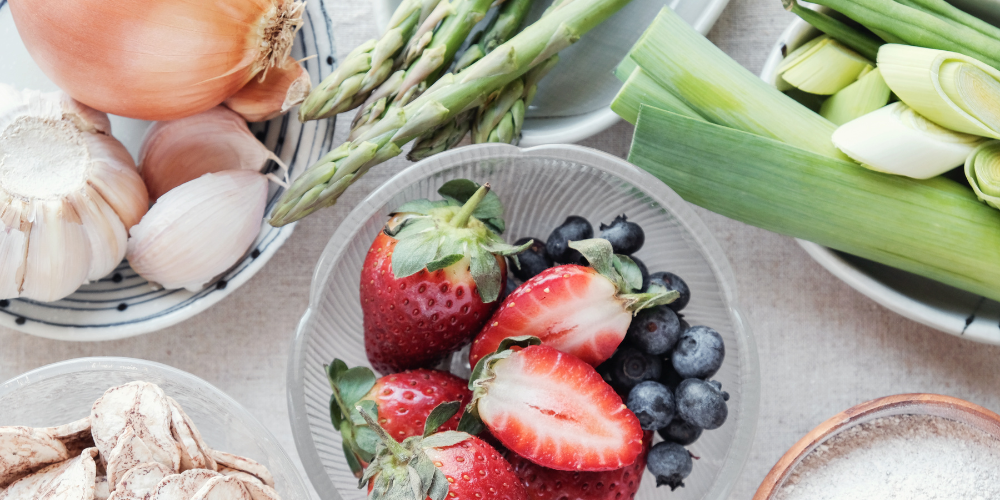
Foods High in Prebiotic Fiber
Legumes, beans, and peas
Oats
Bananas
Berries
Jerusalem artichokes
Asparagus
Garlic
What Can They Do?
Supporting gut health and microbial balance
Contributing to overall digestive wellbeing
Supporting regularity as part of a high-fibre diet
Probiotics
What are they?
Probiotics are live microorganisms that can support your gut microbiome when consumed in adequate amounts. These beneficial bacteria help maintain a balanced digestive environment and work closely with prebiotics to promote overall digestive wellbeing. [1,4,5,6].
Some Types of Probiotics
Bifidobacteria: A genus of bacteria that is commonly used in foods and supplements.
B. animalis
B. breve
B. lactis
B. longum
Lactobacillus: A genus of bacteria that produces lactase and lactic acid.
L. acidophilus
L. reuteri
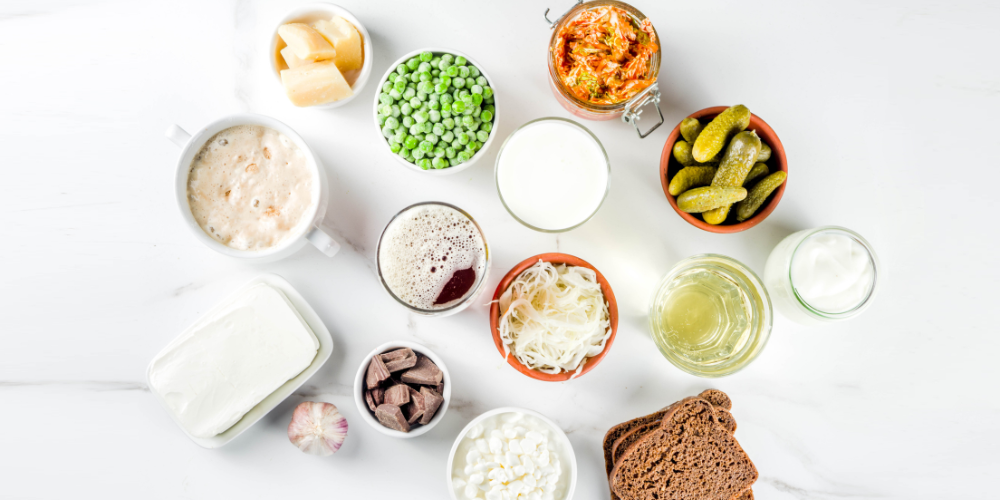
Foods High in Probiotics
Fermented products such as:
Yoghurt
Gouda
Cheddar
Swiss
Parmesan
Miso
Sauerkraut
Pickles
What Can They Do?
Help maintain a healthy balance of gut bacteria
Support digestive comfort and regularity
Contribute to general gastrointestinal health as part of a balanced diet
Postbiotics
What are they?
Postbiotics are the beneficial compounds made when probiotics break down prebiotics in your gut. Think of them as the final step in the prebiotic–probiotic chain reaction. Even though they’re sometimes called “by-products,” they’re actually behind many of the gut health perks we often hear about. [2,5,6].
Some Types of Postbiotics
Short-chain fatty acids
Lipopolysaccharides
Exopolysaccharides
Bacterial lysates (a mixture made from bacterial components)
Cell-free supernatants (a mixture of compounds produced by bacteria and yeast)
Various other metabolites such as vitamins and amino acids
What Can They Do?
Supporting gut microbiome balance
Contributing to digestive system health as part of a varied, fibre-rich diet
Helping maintain overall gut environment stability
Why Should I Include Them In My Diet?
Here are just a few important roles that probiotics, prebiotics, and postbiotics play in supporting everyday wellness: [5]:
Support the body’s natural balance of gut bacteria*
Help maintain healthy digestion and nutrient processing*
Contribute to the production of short-chain fatty acids*
Help the immune system function normally*
Support the body’s natural defences*
Help maintain a healthy gut lining*
Your gut health plays a big part in how your whole body feels. It’s even connected to things like mood, digestion, and energy levels. That’s because your gut is home to hundreds of different bacteria that help keep everything running smoothly [6].
Not sure where to begin? Starting with a daily probiotic can be an easy way to support your gut health—then you can explore prebiotics and postbiotics from there.
Long story short—Good health starts in the gut! Getting more probiotics in your daily diet is as easy as taking Theonia Probiotic Complex. Our formula contains 20 billion CFU per serving and 7 probiotic strains clinically proven to help promote optimal gut health and protect your immune system against harmful pathogens, helping your body maintain a healthy balance.
Want to discover even more ways to boost your well-being? Check out our collection of supplements to supercharge your wellness with nature’s most powerful ingredients.
Davani-Davari, D., Negahdaripour, M., Karimzadeh, I., Seifan, M., Mohkam, M., Masoumi, S. J., Berenjian, A., & Ghasemi, Y. (2019). Prebiotics: Definition, Types, Sources, Mechanisms, and Clinical Applications. Foods (Basel, Switzerland), 8(3), 92. https://doi.org/10.3390/foods8030092